Welcome to CRE TechPulse! A newsletter about AI and CRE, but really, it’s about how we work, adapt, and stay human. Here's the latest news from the week ending June 13th, 2025:
The Great AI Plateau: Why Your Next Model Upgrade Might Feel Like a Shrug
Let's take a quick trip into the way-back time machine. Remember when ChatGPT first dropped and everyone collectively lost their minds? Now we get a new 'breakthrough' model every other Tuesday, and most people are like... 'cool, I guess?' Here's why the AI hype train is running out of steam for regular folks.
Solving Problems You Didn't Know You Had
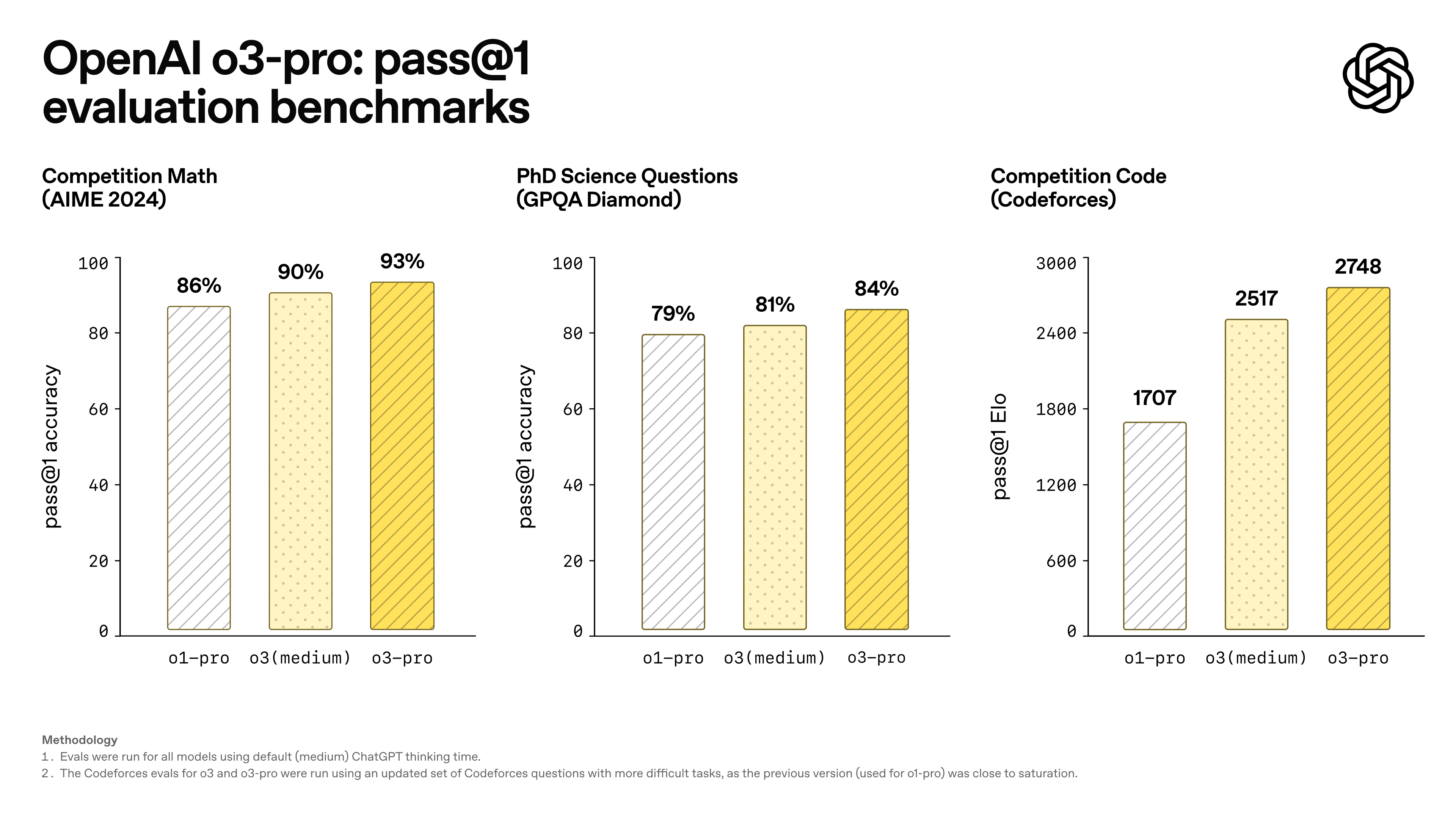
This week OpenAI dropped its o3-Pro Model to the collective yawn of most folks. First, you have to pay $200/month to get access to the model. Second, it's designed to push the length of reasoning to new heights, but only when really fed large amounts of context. The benchmarks are impressive though.
There's no doubt that the new models coming out are getting scary good at at advanced mathematics, PhD-level reasoning, and complex scientific tasks. But let's be honest. When's the last time you needed to prove a theorem during your lunch break? For most folks, including CRE professionals, all we really care about is the usefulness of the model. Can it help me draft an email without sounding like a robot? Can it update my CRM system? Can it help abstract a lease without hallucinating? Those are the things most people care about. It seems like the gap between "technically impressive" and "practically useful" is widening with each new model.
The Taste Test Revolution
Since it's Friday, let's use the Happy Hour analogy. AI platforms are like different types of alcohol. They'll all get you where you want to go, but the experience depends on your taste and the occasion.
People constantly ask me, "which platform do you prefer?" It's like asking what I like to drink. Is it a hot sunny day? Dinner at a fancy restaurant? Hanging with friends at a dive bar? Context matters.
At this time, for most everyday quick tasks I head to ChatGPT and the 4o model does just fine. If I want to reason through an idea or project, I'll switch to the o3 model or head over to Gemini and belly-up to the 2.5 Pro. If I need help with writing or like to "vibe code" with nice visuals, I'll mosey on over to Claude Sonnet 4 and take a sip. If I want up-to-date news, Grok is my flavor of choice. In depth research with visuals? Perplexity. By the way, this week Perplexity came out with "labs" which was so impressive, I dropped another $20/month to use it. This is like another wine club membership. How many of these damned things do I need?
Anyway, the point is that some models are chatty, others concise. Some creative, others strictly factual. Finding your AI flavor profile depends on the task, creativity requirements, and output quality you need. That's where experience trumps benchmarks every time.
Tools Are the New Superpowers
I would say at this point, most AI platforms are only as good as the toolkits. Web search, image generation, code execution, file analysis, this is where the magic happens. Case in point: OpenAI just introduced new "connections" to their o3 model, which feels like a step toward more agentic AI. I connected it to my Outlook and asked it to search for all of the emails for a particular project and summarize them into one concise paragraph. It nailed it. You can connect to your calendars, emails, CRM (Hubspot), Dropbox and more.
Gemini has similar capabilities, and it's only a matter of time before the entire Google ecosystem is connected. This integration race is where the real value lies - not in solving theoretical math problems, but in seamlessly plugging into your existing workflow.
The 80/20 rule is alive and well in AI land. Most people use 20% of AI capabilities for 80% of their needs. When new models come out, they're barely moving the needle on that crucial 20%. This is why your dad thinks all AI models are basically the same. Because for his use cases, they pretty much are.
What This Means for You
As TLC would say, "don't go chasing waterfalls." Stop stressing about the latest model releases. For 90% of you, whatever AI you're using right now can handle your workload just fine.
Instead, focus on:
- Workflow integration over raw capability - How can AI plug into what you're already doing?
- Tool ecosystems over benchmark scores - What connections and integrations matter for your specific use cases?
- Practical application over theoretical potential - What should AI actually do for you today?
We're starting to enter the "plateau phase" of consumer AI as the tech matures. New models are impressive in labs but barely register improvements for everyday users. The future belongs to companies that understand this shift, from raw intelligence to seamless integration.
Time to stop being impressed by what AI can do and start focusing on what it should do for you. The revolution isn't in the next breakthrough model. It's in making AI disappear into your workflow so completely that you forget it's even there.
Prompt of the Week
Your Mission (Should You Choose to Accept It):
Step 1: Pick one routine task you do weekly - could be writing emails, summarizing reports, brainstorming ideas, whatever.
Step 2: Run the same prompt through 3 different AI platforms (ChatGPT, Claude, Gemini, etc.)
Step 3: Don't just compare outputs - pay attention to the vibe. Which response feels most like how you'd naturally approach the task?
Use this prompt:
I'm going to give you the same task using different AI platforms this week. Help me [INSERT YOUR TYPICAL WORK TASK HERE] in your most natural style. Don't try to sound like other AI models - just be authentically you.
Task: [Example: "Draft a follow-up email to a client who's been radio silent for two weeks"]
Context: [Add 2-3 sentences of relevant background]
Tone needed: [Professional/casual/urgent/etc.]
What You're Really Testing:
- Communication style - Formal vs. conversational vs. bullet-point efficiency
- Problem-solving approach - Step-by-step vs. big picture vs. creative angles
- Output length - Concise vs. comprehensive vs. over-explained
- Personality match - Which AI "gets" how you like to work?
In Other News:
Did you enjoy this email?
|